Articles

The Illusion of Cheap Software: Why Freezing IT Projects is a Trap
Over the past year, the IT sector has been undergoing a major transformation, drastically altering the behavior of software buyers. As a manager (Ivelin Ivanov) of a software company with over 15 years of sustainable history in the market, I have observed a highly peculiar and paradoxical trend over the past few months. Many industry colleagues have reported experiencing the exact same phenomenon.
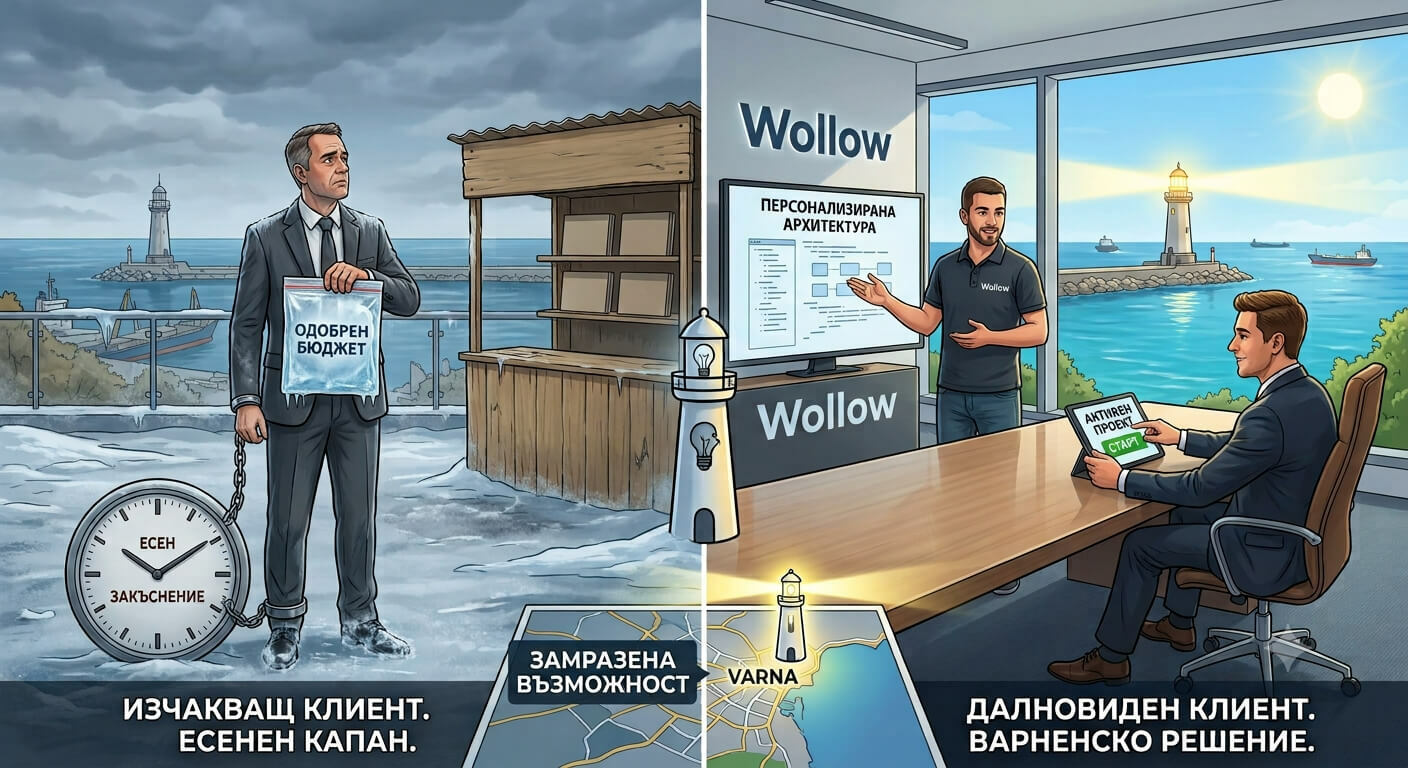
The pattern looks like this: a client submits an inquiry for custom software development, we prepare and send a detailed proposal, the client reviews and fully approves it financially... and at the exact moment the project is supposed to launch, it is suddenly "frozen."
For stable companies whose business models rely on long-term partnerships, maintenance, and ongoing upgrades for existing clients, this is not a fatal issue. They have secured capacity and work lined up for months ahead. But why are clients massively applying this tactic now, and what kind of trap are they setting for themselves in the near future?
The Myth of the "IT Sector on Its Knees"
Driven by media headlines about mass layoffs at global tech giants and massive outsourcing corporations, many business managers are left with the false impression that the entire IT sector is in a deep crisis and starving for work. They step into the shoes of a buyer who believes that if they wait just a little longer, software firms will grow desperate and voluntarily slash their quoted prices.
However, this is a fundamental tactical error. The market right now is highly fragmented, showing a clear divide between two types of IT companies:
-
Sustainable Software Businesses: These are companies with accumulated capital, a strong core team of professionals, and a loyal client base. They do not operate under the stress of scrambling to meet the current month’s payroll and have the luxury of choosing their projects. For them, tasks based on off-the-shelf platforms are often unprofitable in the long run, so they can comfortably turn them down.
-
Companies on the Edge: These are teams that rely entirely on quick, ad-hoc projects to wrap up their budget for salaries for the current month. They take on such low-margin tasks with short-term enthusiasm simply to survive.
When a client freezes an approved project with a stable company in hopes of a "discount," they fail to realize that this company will not lower its price. On the contrary—it will simply redirect its resources toward clients who value time and want to scale immediately.
The Ticking Time Bomb of Ready-Made Platforms and the "Millions vs. Pennies" Paradox
Part of the current market stagnation stems from the illusion that serious business processes can be automated cheaply by patching together ready-made systems (such as WordPress/WooCommerce). This, however, is a hidden, sleeping problem. Ready-made platforms have clear limits; when the client's business begins to grow, the architectural constraints of these systems inevitably crack.
We frequently encounter an absurd mindset in this regard. Take a very recent real-world case: a company that sells agricultural machinery worth millions of dollars operates two online stores (clones targeting different countries) built entirely on WordPress. Recognizing the limitations of the system and the desperate need for proper integration, they sought a solution but refused a rewrite or any serious investment, arguing: "But these websites were built just two years ago, we cannot allocate money for this again."
The paradox is immense. This exact same business does not hesitate to invest hundreds of thousands of dollars in modern machinery, inventory, and physical infrastructure, fully understanding that they require maintenance, depreciate, and must eventually be replaced. Yet, when it comes to the digital heart of their business—the platform through which they showcase and sell multi-million dollar equipment—they expect the software to be eternal, free, and patched up with yet another cheap API quick-fix. When this sleeping problem inevitably wakes up and the ready-made template collapses under data load, the hit to the business will be in the millions, and emergency rescue operations will cost triple.
The Fatal Flaw of Planning "For After the Holidays"
The worst joke clients can play on themselves is the plan to delay launching their frozen projects until autumn or the final weeks of the year.
The moment businesses collectively decide to exit their "wait-and-see" mode—which traditionally happens simultaneously around September and October—the market bottleneck will burst wide open all at once. Dozens of companies will wake up with an urgent need for their software development to begin immediately so it can be ready before Christmas or the start of the new fiscal year.
What will they find then? Sustainable IT companies will have already filled their schedules with upgrades for existing clients or projects from more forward-thinking partners. When the "waiting" clients return to their stable software partner, they won't get a lower price. Instead, they will hear: "Our capacity is completely full. We can onboard you next spring at the earliest."
Conclusion
In business, time is often a more valuable currency than money itself. Freezing an approved project when the market is relatively quiet and high-quality teams have the time to give you undivided, personalized attention is a massive missed opportunity. Smart managers do not wait for software companies to "starve," because they know hungry companies rarely build high-quality, sustainable products. They invest in software while their competition is sleeping—to be a mile ahead the moment the market wakes up.