Articles

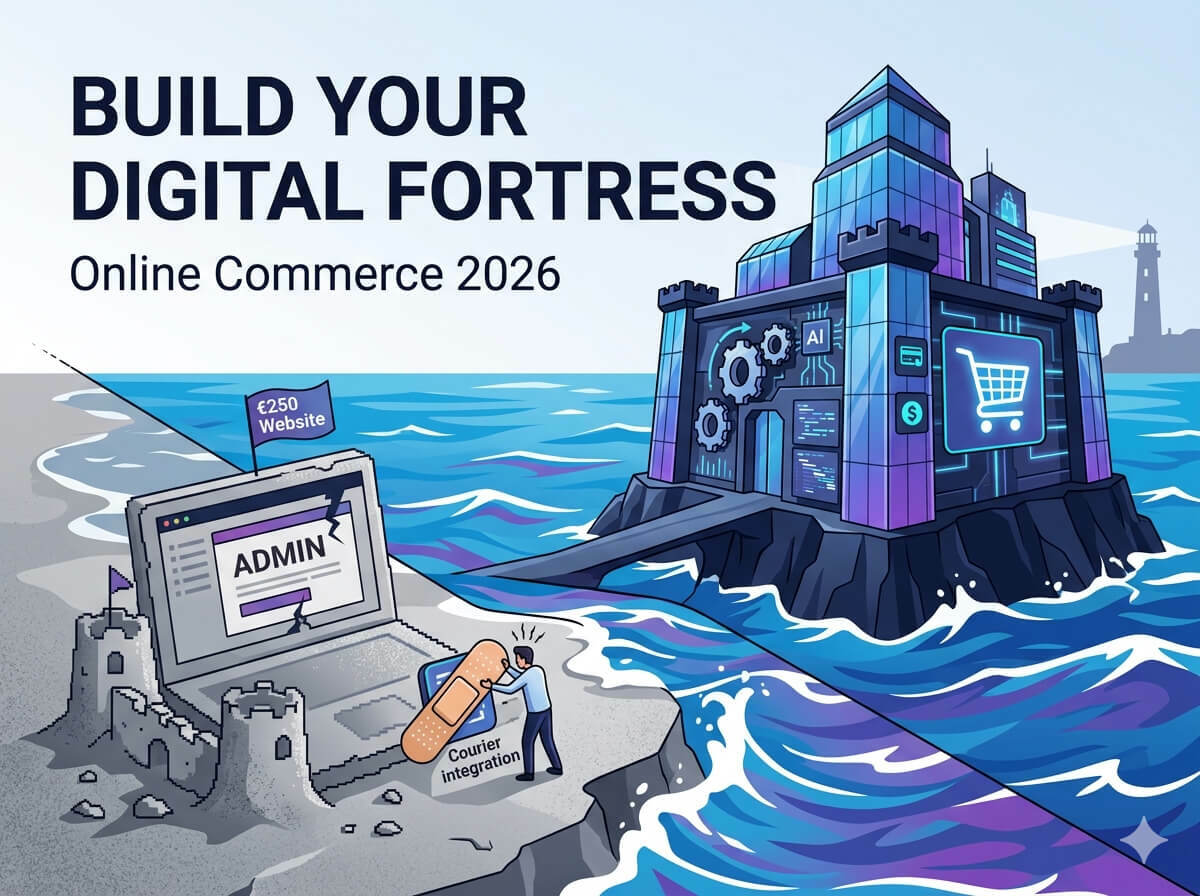
Digital Fortress: Why a €250 Website is Your Most Expensive Mistake in 2026?
The Reality on the Streets
In recent months, more and more "For Rent" signs have been appearing in physical storefront windows. The economic climate is squeezing businesses, but here lies the paradox: while physical locations are closing, digital ones must be fortified. Over the last 15 years at Wollow, we’ve handled hundreds of projects, and we see a dangerous trend – a massive undervaluation of online presence as a strategic investment.
The "No Maintenance Fee" Trap
Have you noticed the aggressive ads on social media? "I build websites where you can change prices yourself – no maintenance fees!". Let’s be honest: this is an attempt to sell you last century’s technology as innovation. Any modern Content Management System (CMS) allows you to manage your content by default. Boasting about this in 2026 is like trying to sell a car by arguing it "has a steering wheel." The real problem comes later. Without professional support, you aren't saving money – you are playing "Russian roulette" with your business.
The Econt Case: When Software Breaks Your Business
Here is a fresh example from April 2026: Econt (a major logistics provider) updated their delivery API. The result? The integrations of many online stores stopped working correctly, especially for smaller settlements.
-
For cheap websites: You have to wait for a freelancer to find the time or hope that a free plugin gets an update that you must then manually install.
-
For professional projects: Your software partner has already adapted the code, tested the system, and your sales didn't stop for a single hour.
Fear of the Admin Panel vs. Reality
Many clients worry: "Will I be able to work with the system?". Today, even children navigate mobile devices with ease. The modern admin panels we build at Wollow are intuitive and user-friendly. The fear of "complexity" is often just an excuse to choose something cheap and limited – a "crippled script" that you will outgrow in just a few months.
Why an Online Store is an Asset, Not Just a Page?
E-commerce continues to generate billions of euros annually. But this volume of sales goes to those whose websites:
-
Load Instantly: Every second of delay in 2026 translates to a direct loss of revenue.
-
Have Working Integrations: Payments, couriers, warehouse systems, and AI-driven tools.
-
Are Secure: Data protection is no longer optional; it is a matter of survival and legal compliance.
Crisis is a Time for Investment, Not Gambling
Could you renovate a physical shop, stock it with goods, and hire staff for less than a single month's rent in a prime location? No. Then why would you expect the software that is supposed to generate your revenue 24/7 globally to cost less than a utility bill?
Three Questions to Ask Before Saying "Yes" to a Cheap Offer:
-
"What happens when a courier or a bank updates their software next month?" (If the answer is "You update the plugin yourself," you are buying a future problem).
-
"Is my site optimized for 2026 or are you using code from 2018?" (Technology ages fast; antiques don't sell).
-
"How much will one hour of downtime cost me during peak traffic?" (A professional team will give you a reaction plan; an amateur will stop answering the phone).
In a crisis, those who optimize and build digital fortresses survive. A cheap offer is merely an illusion of savings that costs you the most when the market puts you under pressure.